|
On the Flightline
(What it's like to climb around in a billion dollar bomber)
|
| As if flying the simulator wasn't enough, Mike took me next out to the flightline where we climbed up into a couple of real B-1 bombers. I was pretty much in heaven. |
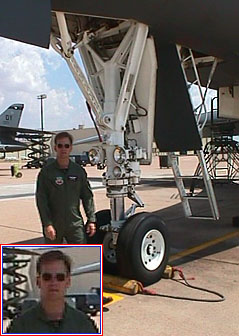 |
This is Captain David L. Odem, Chief of the B-1 Flight Simulator at Dyess.
Captain Odem started out by showing me the clever set of switches attached
to the front gear door that allows the B-1 to scramble so quickly. When placed on alert, the crew presets the aircraft's electronics
as needed for takeoff. The crew runs up to the aircraft and punches
the "start buttons" (this is what I'm calling them), which bring's the access ladder down, turns on all the required electronic
systems and fires up the big turbofan engines. |
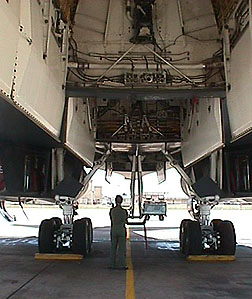 |
You can get an idea of the massive size of the B-1 in this photo where Captain Odem is standing under the open weapons bay. I believe he told me that
the radar altimeter in the cockpit reads out 12 feet while parked on the
tarmac (the distance from the radar to the ground).
The doors are open on all three bays in this photo. These doors are only opened for a few seconds during
actual weapons drop in order to prolong their relatively short life expectancy.
They take a real beating while open in flight. |
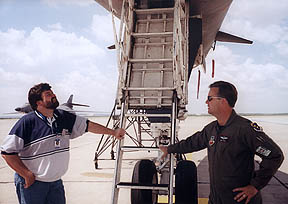 |
| This is the ventral crew ladder. The only way in and out of the B-1 other than the ejection seats! |
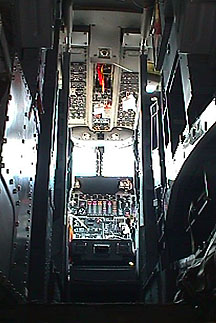 |
| This photo is taken from the top of the boarding ladder. The Weapons Officers ejection seats are above on each side. Straight ahead past the
toilet is the front cockpit area. |
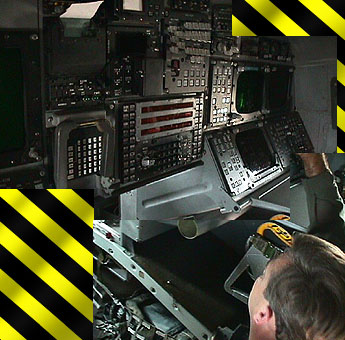 |
| I took this photo while seated in the Offensive Weapons station, Captain Odem is standing on the walkway floor that connects the front and rear cockpits. Sitting in an active Aces II ejection seat with only plastic tie-wraps protecting me from ejecting is a funny feeling by the way. |
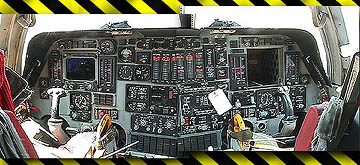 |
| And here I am in the front cockpit. The B-1 instruments are very well organized and easy to read at a glance, so you can spend more time looking out the windscreen. An MFD was missing from this aircraft with a maintenance tag detailing who had it and why. |
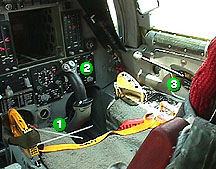 |
1. Note the electricians tie-wraps that are used to keep the ejection handles
safe when not in use.
2. The fighter-style stick is indicative of how this big
bomber is designed to fly.
3. This is the control lever for the variable-sweep wings.
|

Go to Page 3 |


