 |
| When
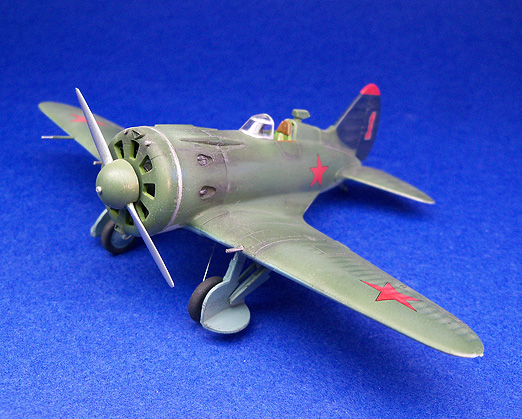
the I-16 flew for the first time in December 1933,
it was far ahead of any other fighter design in the world. It featured
retractable landing gear, an enclosed armored cockpit, a cantilever
wing and variable pitch propeller. |
 |
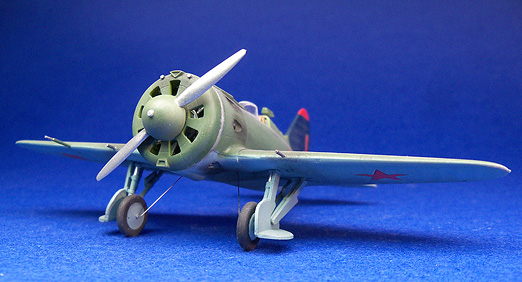
| The aircraft
was highly maneuverable, but also tricky to fly - with the engine near
the center of gravity and the pilot well behind, the pilot had to maintain
strict control of the aircraft at all times. |
 |
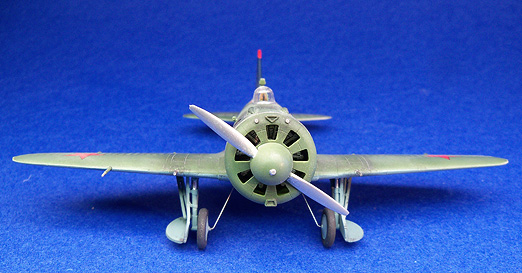
The I-16 is
known by a variety of names. The Republicans called it 'Mashka' (small
fly) and the Nationalist's 'Rata' (rat), the Japanese called it 'Abu'
(gadfly), and the Germans called it 'Dientsjager' (duty fighter).
In Russia it has been known as 'Yastrebok' (hawk) or more commonly
as 'Ishak' (little donkey), reflecting its hardworking role. |
 |
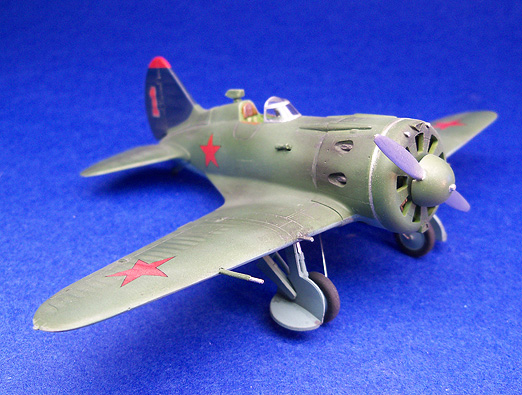
| Although the
I-16 was obsolete when the Germans invaded Russia in June 1941, it was
still Russia's most numerous fighter. |
 |
| One of the most unthinkable uses
for the i-16 came in ramming attacks. Russian pilots were taught to hit the tail surfaces of German bombers and then bail
out. |
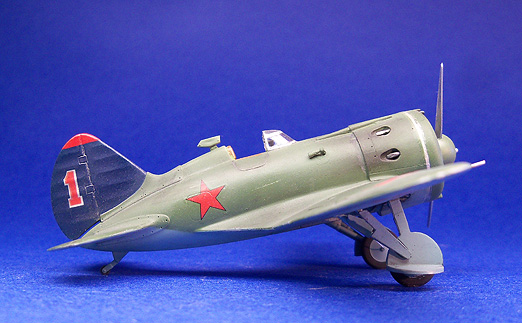 |
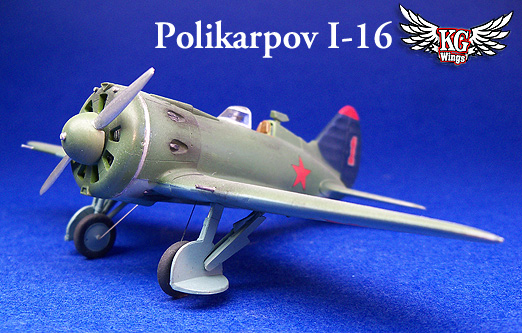
| Hasegawa did a nice job on this kit. It is a fast build with no snags at all during construction. The fit is excellent and very little filler was required on my kit. Wing ribbing and recessed panel lines are really well done. |
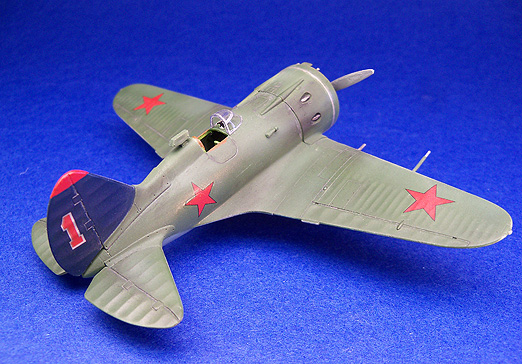 |
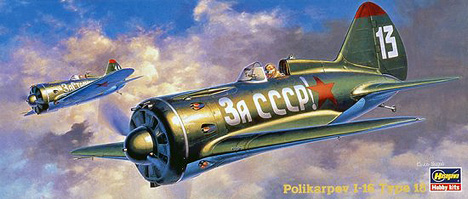
| My only criticism of this kit is with the printing of the decals. For some unexplained reason all white markings on the decal sheet were printed in silver so I couldn't build the aircraft depicted on the box cover and had to use the alternate markings provided which had no white/silver markings. |
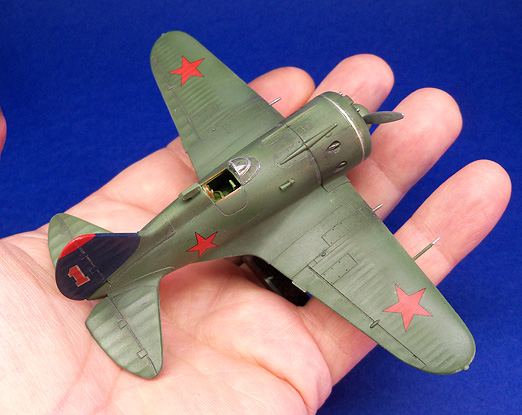 |
| As you can see the i-16 is tiny enough in this scale to fit in the palm of my hand. |
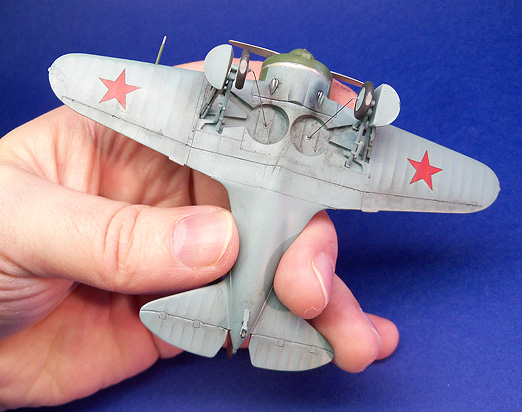 |
| Here's a look at the underside. I used guitar string for the gear cables. |
|
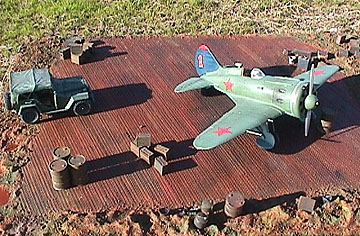
| For a bit of nostalgia, here is one of the original photos taken of my kit back in 2001. Most people were surfing my site using a 128k modem so this resolution was reasonable at the time. Now it seems so very small. |